Housecleaning with Essential Oils: Practical Recipes and Safety
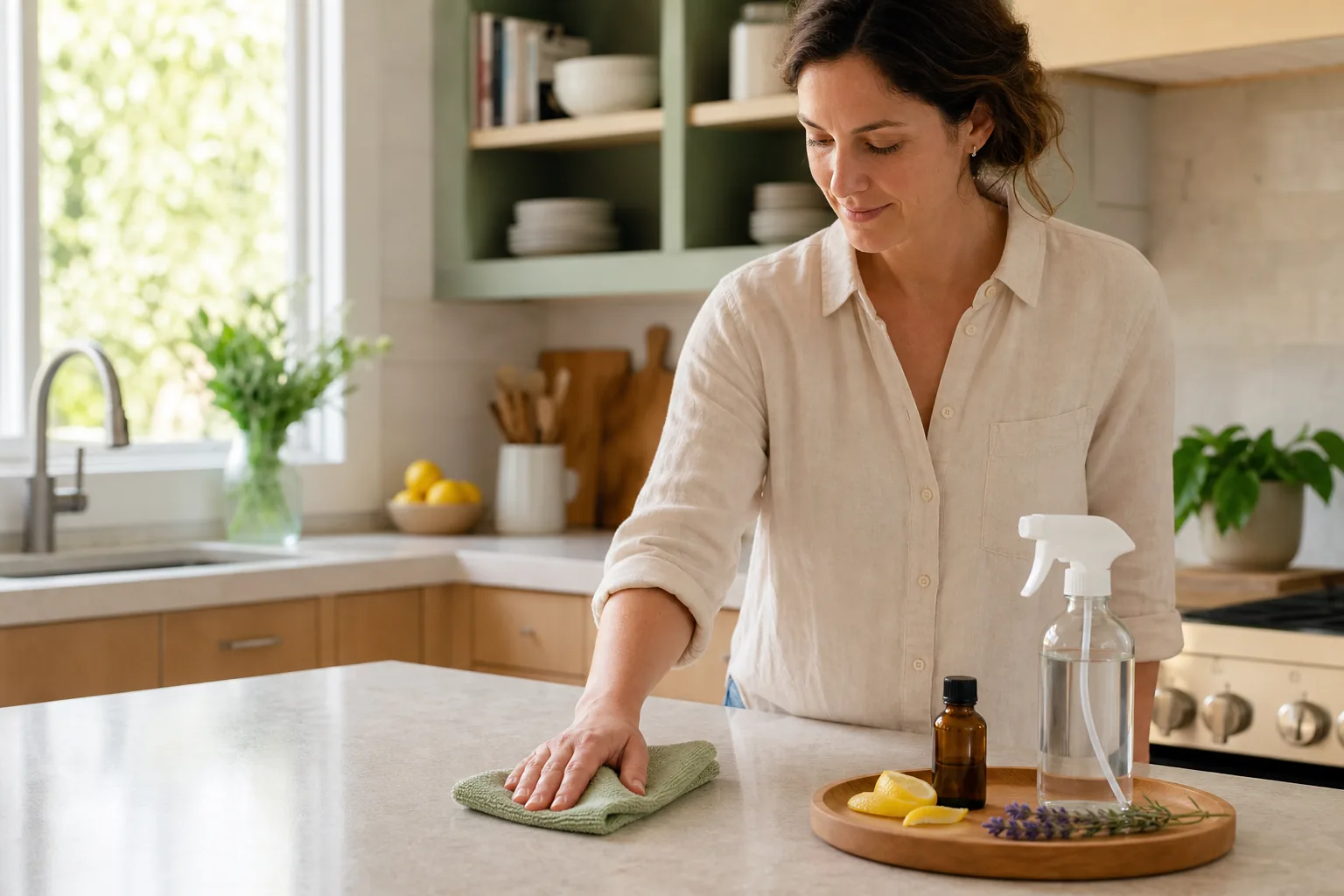
Essential oils can earn a sensible place in housecleaning when the goal is everyday cleaning, a pleasant aroma, or help loosening a small sticky residue. They can make a routine feel fresher and more enjoyable, and that matters if it helps you clean consistently.
The key is to give oils the right job. A homemade lemon, lavender, eucalyptus, or tea tree spray may smell clean, but it is not automatically a sanitizer or disinfectant. Use soap or detergent and physical wiping to remove soil. When someone is sick or a surface truly needs disinfection, use an EPA-registered product for that surface and follow its label—including the contact time.
Quick answer: where essential oils fit
Essential oils are most worth exploring for:
- adding a chosen aroma to an ordinary soap-and-water cleaning session
- helping soften adhesive or greasy residue in a carefully tested spot treatment
- making a small, use-now scrub paste for sealed sinks, tubs, or tile
- replacing an overpowering “chemical-clean” fragrance with a lighter scent you control
They are not dependable substitutes for:
- an EPA-registered sanitizer or disinfectant
- safe food handling
- mold remediation or moisture repair
- manufacturer-approved care for stone, wood, electronics, floors, appliances, or specialty finishes
The best mindset is exploratory but precise: start with one low-risk surface, use a small amount, label the mixture, test an inconspicuous spot, ventilate the room, and judge success by whether the surface is visibly clean and undamaged—not by unsupported germ-killing assumptions.
Cleaning, sanitizing, and disinfecting are different
These words are often used as if they mean the same thing, but the distinction determines which product is appropriate.
- Cleaning removes dirt, grease, food residue, allergens, and many germs with water, soap or detergent, and mechanical action such as wiping or scrubbing.
- Sanitizing uses a registered chemical process to reduce bacteria on a surface to a level considered safe under public-health rules. It is not necessarily intended to kill viruses.
- Disinfecting uses a registered product to kill the viruses and bacteria named on its label when the directions are followed.
The EPA’s cleaning, sanitizing, and disinfecting comparison explains that sanitizers and disinfectants must meet testing and registration requirements. A homemade essential-oil recipe has not passed those product-specific tests.
Most homes need cleaning more often than disinfection
Routine cleaning is not a consolation prize. It is the foundation of home hygiene. The CDC’s home-cleaning guidance says soap, water, and scrubbing remove dirt and most germs, and that routine sanitizing or disinfecting is generally unnecessary unless someone is sick or a household member has a weakened immune system.
That creates a useful lane for cautious essential-oil experiments. On an ordinary day, a small aromatic addition to a soap-based cleaner can make wiping counters or a bathroom sink more pleasant without pretending the mixture sterilizes the surface.
What the antimicrobial research can—and cannot—show
Many essential oils inhibit bacteria or fungi in laboratory dishes or specially designed surface formulations. Those findings are scientifically interesting, but cleaning performance depends on concentration, emulsifiers, other active ingredients, surface type, soil load, exposure time, and the exact organism.
For example, one hard-surface formulation study tested eucalyptus oil together with chlorhexidine and 70% isopropyl alcohol on contaminated steel. The complete formulation showed antimicrobial activity. That does not tell us that several drops of eucalyptus in water will disinfect a kitchen counter, nor does it isolate how much of the effect came from eucalyptus.
Laboratory evidence is a reason to keep studying plant-derived ingredients and professionally formulated products. It is not a reason to label a DIY spray “antibacterial,” “antiviral,” or “disinfecting.”
Oils that are enjoyable to explore for cleaning
Choose by aroma and practical fit rather than by a list of microbes from a laboratory study.
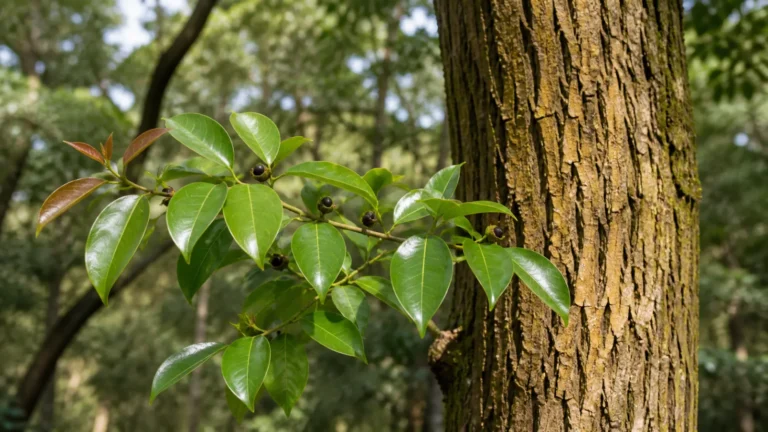
- Lemon: bright and familiar. It is a natural first experiment for kitchens and sticky-residue spot treatments, but concentrated citrus oil can affect some plastics, paints, stone sealers, and wood finishes. Learn more in the Lemon Essential Oil profile.
- Sweet orange: warm, cheerful, and useful in the same kinds of carefully tested residue applications as lemon. It can also damage some finishes.
- Lavender: softer and less “cleaner-like,” which can be helpful for bedrooms or a gentle all-purpose aroma. See the Lavender Essential Oil profile.
- Eucalyptus: crisp and assertive. Use sparingly and avoid it when fragrance triggers coughing, migraine, or asthma.
- Pine or fir: a classic woodsy cleaning association. Aroma does not mean the surface has been sanitized.
- Tea tree: frequently chosen because of laboratory antimicrobial research, but it has a strong medicinal aroma and can be hazardous if swallowed or contacted by pets. It is optional, not essential to an effective everyday cleaner.
More drops do not create a better cleaner. A lower scent level is easier on the people sharing the room and less likely to leave a film.
Start with a small cleaning kit
You do not need a shelf of specialized ingredients. A practical kit includes:
- one plain liquid dish soap or surface-safe detergent
- baking soda for selected scrub-safe surfaces
- clean microfiber cloths in different colors for kitchen and bathroom work
- a small reusable spray bottle or mixing bowl
- waterproof labels and a marker
- protective gloves if the cleaner or your skin requires them
- one or two essential oils you actually enjoy
Keep the original manufacturer-labeled cleaners for surfaces or situations that need a tested product. A product carrying the EPA Safer Choice label can be a useful option when you want evaluated ingredients and demonstrated cleaning performance without inventing a formula.
Recipe 1: use-now aromatic multi-surface cleaner
This is an everyday cleaner, not a disinfectant. It is intended for washable, sealed, nonporous surfaces that tolerate water and mild dish soap.
Ingredients
- 2 cups (475 mL) water
- 1 teaspoon plain liquid dish soap
- 6 to 10 drops of essential oil total
Try six drops of lemon plus two drops of lavender, or four drops each of lavender and a fir oil. For a lighter scent, start with four drops total.
Procedure
- Confirm the surface manufacturer permits water and mild soap.
- Add the water and dish soap to a clean spray bottle, then add the essential oil.
- Label the bottle with every ingredient and the date.
- Turn the bottle gently before use. Soap helps disperse oil temporarily, but this is not a professionally stabilized emulsion.
- Spray the cloth rather than creating a cloud over the room or spraying near the face.
- Wipe the surface with enough friction to remove visible soil.
- On food-contact surfaces, follow with a clean water-dampened cloth and let the area dry before food returns.
Make only what you expect to use promptly. A water-based home mixture has no validated preservative system. Empty and wash the bottle regularly, and discard the mixture if its appearance or odor changes. Never top off an old batch with a new one.
Recipe 2: use-now aromatic scrub paste
This mild abrasive paste can be explored on a sealed porcelain sink, glazed tile, or a tub surface that permits baking soda. It can scratch acrylic, polished metal, glass cooktops, natural stone, and some coatings, so a hidden test is essential.
Ingredients
- 1/2 cup baking soda
- 1 tablespoon plain liquid dish soap
- 1 to 2 tablespoons water, added gradually
- 2 to 3 drops lemon or lavender essential oil
Procedure
- Mix the baking soda and soap in a small bowl.
- Add just enough water to make a soft paste, then stir in the essential oil.
- Test a coin-sized hidden area and rinse it. Check after the surface dries.
- Apply a small amount with a damp non-scratch cloth or sponge.
- Rub gently, rinse completely, and dry the surface.
- Discard leftovers rather than storing a wet paste in an unlabeled jar.
Scrubbing does the cleaning work. The oil supplies aroma; it does not turn the paste into a mold killer or disinfectant.
Recipe 3: citrus spot treatment for sticky residue
Citrus oil can be useful because its constituents can dissolve some sticky, oily residues. That same solvent action can soften paint, cloud acrylic, stain porous material, or disturb a finish.
Ingredients
- 1 tablespoon plain carrier oil
- 1 drop lemon or sweet orange essential oil
- mild dish soap and water for the follow-up wash
Procedure
- Check the manufacturer’s instructions and avoid unfinished wood, natural stone, painted surfaces, acrylic, rubber, and unknown plastics.
- Wear gloves and test a tiny hidden spot.
- Put a small amount of the diluted mixture on a cloth—not directly on the object.
- Dab the residue and wait one minute. Do not flood the surface.
- Lift the loosened residue without aggressive scraping.
- Wash the spot with dish soap and water to remove the oily film, then dry it.
If the finish changes, stop. A labeled adhesive remover approved for that material is a better next step than adding more essential oil.
Recipe 4: a low-exposure cleaning aroma
If the main goal is for the room to smell fresh after cleaning, you do not need to scent every wet surface.
- Finish cleaning with an unscented product.
- Put one drop of lavender, lemon, or fir oil on a paper aroma strip.
- Place the strip in a ventilated adult-only area for 15 to 30 minutes.
- Remove it if anyone develops headache, nausea, cough, eye irritation, or breathing symptoms.
- Discard it where children and pets cannot retrieve it.
This keeps fragrance optional and easier to stop than a whole room of freshly coated surfaces. Do not hide oil-soaked cotton in vents, heaters, appliances, bedding, or upholstered furniture.
A room-by-room approach
Kitchen
Use the soap-based cleaner for everyday soil on approved sealed surfaces, then rinse food-contact areas with a clean damp cloth. Do not spray near exposed food, cutting boards in active use, infant feeding items, or pet bowls. Greasy stovetops and ovens should be cleaned according to the appliance manual; essential oils are combustible concentrates and do not belong near a flame or hot element.
Bathroom
Soap, water, and scrubbing handle ordinary sink and tub film. The use-now scrub paste may help on compatible glazed surfaces. Essential oils do not repair failed caulk, stop a leak, or remove a moisture source. Ventilate during and after showers and let wet materials dry.
Living spaces and bedrooms
Prioritize dust capture with a damp microfiber cloth and vacuuming with an appropriate filter. If you want aroma, use the short aroma-strip method rather than spraying bedding, pillows, upholstered furniture, or the air around a sleeping person.
Floors
Follow the flooring manufacturer’s instructions. Extra oil can leave a slippery residue, affect a finish, or transfer to bare feet and paws. Do not add essential oil to a steam mop or floor-cleaning machine unless its manufacturer explicitly permits it.
Surface testing matters more than a “natural” label
Before using any homemade mixture, test it in a spot that is normally hidden and let it dry completely. Watch for clouding, color transfer, tackiness, dullness, swelling, or a lingering oil ring.
Use extra caution with:
- marble, limestone, travertine, and other natural stone
- unsealed grout and porous tile
- waxed, oiled, painted, or unfinished wood
- quartz and stone sealers with product-specific restrictions
- acrylic, polycarbonate, rubber, and unknown plastics
- electronics, touchscreens, and appliance controls
- antiques and specialty coatings
Vinegar is acidic and can damage stone and some finishes. Citrus oils can act as solvents. Baking soda can scratch. Combining several popular “natural” ingredients does not cancel those properties.
When you actually need a disinfectant
Disinfection may be appropriate when someone in the home is sick, a person is immunocompromised, or a high-touch surface has a specific contamination concern. Clean visible soil first unless the product label says it is a one-step cleaner-disinfectant.
Then choose an EPA-registered disinfectant whose label lists the surface and target organism. Follow the dilution, protective-equipment, ventilation, rinsing, and storage directions. Keep the surface visibly wet for the full contact time.
Do not add essential oil to a registered disinfectant. Changing the formula can alter concentration, wetting, compatibility, or safety, and the modified mixture is no longer the product EPA evaluated.
Bleach, alcohol, vinegar, and peroxide are not a blending palette
Never combine cleaners unless the product label explicitly directs it. In particular:
- never mix bleach with vinegar, ammonia, alcohol, peroxide, essential oils, or another cleaner
- never combine vinegar and hydrogen peroxide in the same bottle
- do not add essential oil to bleach or alcohol disinfectant
- do not heat a cleaning mixture
- do not improvise a disinfectant concentration by smell
The CDC’s bleach guidance warns that bleach and other cleaners can release dangerous vapors when mixed. Use good ventilation and the protective equipment named on the label. If fumes cause burning eyes, coughing, chest tightness, or breathing difficulty, leave for fresh air and contact Poison Control or emergency services as appropriate.
Mold and mildew need moisture control
An essential-oil spray may change the odor around a damp area, but it does not solve the water problem that allows mold to return. The EPA’s mold guidance emphasizes moisture control and drying wet materials within 24 to 48 hours.
Fix leaks, improve ventilation, dry the area, and follow appropriate cleanup guidance for the material and size of the problem. Large areas, contaminated HVAC systems, sewage exposure, or mold affecting someone with significant respiratory disease may require professional assessment. Do not diffuse oil to cover a persistent musty odor.
Laundry and appliances require restraint
Do not pour essential oil into a washing machine, dishwasher, humidifier, robot mop, vacuum filter, CPAP device, or steam cleaner unless the manufacturer specifically permits that use. Oil can damage seals and plastics, leave residue, create a fire concern near heat, or expose skin and lungs unpredictably.
Avoid putting oil directly on dryer balls, dryer sheets, clothing, towels, or bedding before high heat. If lightly scented laundry is important, choose a product formulated and labeled for that appliance and household, or use the removable aroma-strip method in the room after the cleaning is complete.
Children, pets, and shared air
Concentrated oils and homemade cleaners should be locked up in their labeled containers, not stored under an accessible sink or in a beverage bottle. Never let a child help measure essential oils. Clean while young children are elsewhere, and keep them away until surfaces have been wiped as directed and are dry.
Poison Control notes that essential oils can cause skin reactions and poisoning when swallowed; eucalyptus and camphor are among the oils associated with seizures. If an exposure occurs in the United States, call 1-800-222-1222 or use webPOISONCONTROL. Do not induce vomiting unless a poison specialist directs it.
Pets can contact cleaners through paws, fur, grooming, or spills. The ASPCA’s essential-oil guidance advises that concentrated oils can be hazardous and recommends avoiding diffusion around birds. Keep pets away from wet surfaces, rinse food and water areas, and ask a veterinarian about species-specific concerns. A scent that feels mild to a person may be intense to an animal.
Fragrance sensitivity, asthma, and skin protection
Essential oils add volatile fragrance chemicals to the air. For someone with asthma, migraine, eczema, fragrance sensitivity, or an allergy, an unscented cleaner may be the safer and more considerate choice. Open windows or use exhaust ventilation when conditions allow, spray a cloth instead of the air, and stop if anyone develops symptoms.
Wear gloves if the cleaner irritates your skin. Avoid touching your face while cleaning, wash your hands afterward, and do not use a surface cleaner as a hand cleaner. Oxidized or old essential oils may be more likely to irritate skin, so cap bottles tightly and store them away from heat and light.
Labeling, storage, and cleanup
Every homemade mixture should be treated as a cleaning product, not as harmless scented water.
- label the container with all ingredients and the date
- include “cleaner—not a disinfectant” when relevant
- never use a food, beverage, or medicine container
- store it locked away from children and pets
- do not reuse a bottle that previously held an incompatible chemical
- keep essential oils in their original capped bottles
- wash reusable cloths and let them dry fully
- discard a mixture that separates unusually, changes odor or color, or has an unknown history
If you cannot remember what is in a bottle, do not sniff it closely or test it by mixing in another ingredient. Follow local household-chemical disposal guidance.
A practical cleaning workflow
- Identify the surface and check its care instructions.
- Decide whether the goal is ordinary cleaning or true disinfection.
- Remove clutter and visible debris.
- Ventilate the room and move children and pets away.
- For ordinary cleaning, start with water, a small amount of soap, and mechanical wiping.
- Add a low amount of essential oil only when aroma or a tested residue application adds value.
- For disinfection, switch to an appropriate registered product and follow its label exactly.
- Rinse food-contact areas when required, let surfaces dry, wash hands, and store products securely.
For broader precautions, visit Safe Use of Essential Oils.
Bottom line
Essential oils can make housecleaning more personal and enjoyable, and carefully diluted citrus oil can be genuinely useful for selected sticky residues. A simple aromatic soap cleaner or use-now scrub paste is a reasonable experiment on a compatible surface.
The strongest results come from matching the method to the job: soap and friction for ordinary cleaning, moisture repair for mold prevention, and a registered label-directed product for disinfection. Explore the aroma and practical possibilities, but keep quantities low, surfaces tested, mixtures labeled, shared air ventilated, and children and pets protected.
Sources
- Centers for Disease Control and Prevention. When and How to Clean and Disinfect Your Home. Updated January 31, 2025.
- U.S. Environmental Protection Agency. What’s the Difference Between Products That Disinfect, Sanitize, and Clean Surfaces?. Updated October 8, 2025.
- U.S. Environmental Protection Agency. Selected EPA-Registered Disinfectants.
- Centers for Disease Control and Prevention. Cleaning and Disinfecting with Bleach. Updated April 24, 2024.
- U.S. Environmental Protection Agency. Learn About the Safer Choice Label.
- U.S. Environmental Protection Agency. How Do I Get Rid of Mold?. Updated September 25, 2025.
- National Capital Poison Center. Essential Oils: Poisonous When Misused. Accessed August 3, 2026.
- ASPCA Animal Poison Control Center. The Essentials of Essential Oils Around Pets. June 23, 2022.
- Berrington AW, et al. Antimicrobial Efficacy of a Novel Eucalyptus Oil, Chlorhexidine Digluconate and Isopropyl Alcohol Biocide Formulation. BMC Infectious Diseases. 2012.
This article is educational. Follow product labels, surface-manufacturer instructions, local disposal rules, and individualized medical or veterinary advice when relevant.