Essential Oils for Warts: Evidence, Safety, and Better-Proven Options
No essential oil currently has strong enough evidence to recommend it as a reliable wart remover. Tea tree oil has one published case report, and East Indian sandalwood oil has been studied in small or product-specific trials. That is interesting early research—not proof that a bottle of essential oil will safely clear a wart at home.
For a confirmed ordinary wart on a hand or foot, waiting is often reasonable because many warts disappear as the immune system responds. When treatment is wanted, a labeled salicylic-acid wart remover has better evidence than tea tree, oregano, frankincense, or lemon oil. A dermatologist can offer freezing and other treatments for painful, spreading, persistent, or uncertain growths.
The first step is making sure the spot really is a wart. Corns, calluses, skin tags, molluscum contagiosum, harmless age-related growths, and some skin cancers can look similar. Do not apply an acid or essential oil to a growth you have not confidently identified.
Quick answer
- Tea tree oil: Wart evidence consists mainly of a single 2008 case report involving one child. Tea tree can also cause irritation or allergic contact dermatitis, especially when used undiluted or after the oil has oxidized.
- East Indian sandalwood oil: A small uncontrolled study reported improvement, and a product containing 10% to 30% oil entered a larger clinical trial. These findings do not establish ordinary retail sandalwood oil as a proven home treatment.
- Oregano, frankincense, lemon, and proprietary blends: There is no convincing clinical evidence that these oils clear common or plantar warts. Oregano is strongly irritating, and expressed lemon oil can make skin more sensitive to ultraviolet light.
- Better-supported home option: An over-the-counter salicylic-acid wart remover used exactly as labeled can modestly improve ordinary non-genital warts.
- Best reason to see a clinician: The growth is on the face or genitals, hurts, bleeds, burns, itches, changes, grows rapidly, looks like a sore, recurs, or might not be a wart.
What a wart is—and what it is not
A common skin wart is a noncancerous growth caused by certain types of human papillomavirus, or HPV. The virus infects the outer layer of skin, often through a tiny cut or break. Common warts are not the same thing as the sexually transmitted HPV types that most often cause genital warts.
Warts vary by location and appearance:
- Common warts are rough, rounded bumps often found on fingers, hands, elbows, or knees.
- Plantar warts grow on the sole of the foot. Pressure can push them inward beneath a callus and make standing or walking painful.
- Flat warts are smaller and smoother and often occur in groups on the face, legs, or beard area.
- Filiform warts have threadlike projections and tend to appear on the face.
- Periungual warts grow around or beneath nails and can disrupt nail growth.
- Genital warts occur in or around the genital or anal area and require a separate medical and sexual-health approach.
The tiny dark dots seen in some warts are clotted blood vessels, not “seeds.” A plantar wart may interrupt the normal lines of the sole, while skin lines often continue across a corn or callus. Those clues help, but they cannot replace an examination when the diagnosis is uncertain.
Molluscum contagiosum is also separate. Its smooth, dome-shaped bumps are caused by a poxvirus, not HPV, and should not be called “molluscum warts.” Skin tags, moles, seborrheic keratoses, corns, and calluses are different conditions as well.
Make sure it is safe to treat at home
The American Academy of Dermatology recommends seeing a dermatologist when a growth is on the face or genitals; changes, hurts, itches, burns, or bleeds; appears in large numbers; persists despite home treatment; or occurs in someone with diabetes or a weakened immune system.
Avoid self-treatment and arrange an examination if:
- You are not certain the growth is a wart
- It is growing rapidly, changing color or shape, ulcerated, crusting repeatedly, or looks like an open sore
- Hair grows from it, or it could be a mole or birthmark
- It is on an eyelid, face, lip, inside the mouth or nose, genitals, or anus
- It lies under or beside a nail and is changing the nail
- It is painful, infected-looking, bleeding without being picked, or interfering with walking
- You have diabetes, poor circulation, reduced feeling in the area, or a weakened immune system
- You are pregnant and unsure whether a treatment is appropriate
- The person is a young child or cannot reliably describe pain or irritation
Some skin cancers can resemble warts. Treating the wrong growth can injure the surface while delaying diagnosis. If a presumed wart grows despite treatment or repeatedly breaks down, stop treating it and have it examined.
Do essential oils remove warts?
The evidence is too limited to answer yes. Laboratory antiviral activity, traditional use, testimonials, and a treatment working once are not the same as a controlled clinical trial showing that it consistently clears correctly diagnosed warts without unacceptable harm.
Tea tree oil: one case is not a treatment standard
A 2008 report described a child whose hand warts cleared after daily topical tea tree oil. A case report can identify an idea worth studying, but it has no control group and cannot show whether the oil caused the change. Warts often resolve spontaneously, which makes uncontrolled observations especially difficult to interpret.
No larger body of randomized evidence has established tea tree oil as an effective wart treatment. The National Center for Complementary and Integrative Health says there is not enough evidence to determine whether topical tea tree oil is useful for conditions beyond the few specifically studied uses it reviews.
Tea tree oil is also a recognized cause of allergic contact dermatitis. A review of published reactions found that oxidation increases its allergenic potential and that many reported reactions involved pure oil used directly on skin. Covering undiluted tea tree oil under a bandage can intensify exposure rather than make it safer.
Sandalwood oil: promising product research, unanswered questions
A small uncontrolled study treated ten people with a topical East Indian sandalwood oil preparation; eight reportedly cleared and two improved. A larger randomized dose-ranging study of a formulated 10%, 20%, or 30% East Indian sandalwood oil ointment was registered and completed, but a trial registration is not itself proof of efficacy, and the formulation is not interchangeable with a consumer bottle.
Species and chemistry also matter. The research involved Santalum album, while products sold simply as “sandalwood” may come from other species. Even a positive result for one standardized ointment would not validate undiluted sandalwood oil, an improvised carrier-oil mixture, or every sandalwood species.
Oregano, frankincense, and lemon: popular claims without good wart trials
Oregano essential oil is promoted online as a “hot” way to burn away a wart. A burning sensation is evidence of irritation, not evidence that HPV has been eliminated. Published reports document irritant dermatitis from oregano oil, and deliberately injuring the skin can cause pain, discoloration, infection, and scarring.
Frankincense is another common recommendation, but human wart trials of ordinary frankincense essential oil are lacking. Laboratory findings involving extracts, isolated compounds, or cancer cells should not be converted into a claim that frankincense removes a skin growth.
Lemon oil is sometimes suggested because it feels drying. Drying or peeling the surface does not prove the virus-infected tissue has cleared. Cold-pressed lemon oil may also be phototoxic, meaning treated skin can react more strongly to sunlight or ultraviolet exposure.
Why this article does not include an essential-oil wart recipe
A practical recipe needs both a plausible benefit and a reasonably defined safe dose. Wart research does not provide that for retail essential oils. The most frequently shared recipes use undiluted oregano or tea tree, repeated application, and bandage occlusion—the same combination most likely to irritate or sensitize skin.
Diluting an oil reduces irritation risk but does not create evidence that the diluted mixture removes warts. Making the blend stronger to imitate a study formulation would be inappropriate because the study product’s composition, manufacturing, testing, diagnosis, and monitoring cannot be reproduced by counting drops at home.
If you are already using an essential-oil product, do not combine it on the same spot with salicylic acid, freezing products, prescription medicine, heat, or another irritant unless a dermatologist or pharmacist specifically approves the combination. Multiple treatments make it harder to identify the cause of a burn or rash.
Better-supported options for ordinary hand and foot warts
Option 1: watchful waiting
Many warts are harmless and eventually disappear without treatment, particularly in children. Waiting avoids treatment pain and skin injury, but resolution can take months or years. Treatment may still be worthwhile when a wart hurts, spreads, interferes with activity, or causes distress.
While waiting:
- Do not pick, bite, cut, or scratch the wart
- Cover it when it is likely to rub or contact shared surfaces
- Wash your hands after touching or treating it
- Avoid shaving over it, which can create tiny cuts and spread virus to nearby skin
- Do not share towels, socks, shoes, razors, nail tools, pumice stones, or emery boards
Option 2: labeled salicylic-acid treatment
A Cochrane review found modest evidence that topical salicylic acid works better than placebo for ordinary non-genital skin warts. It removes layers gradually, so consistent use over several weeks is usually required.
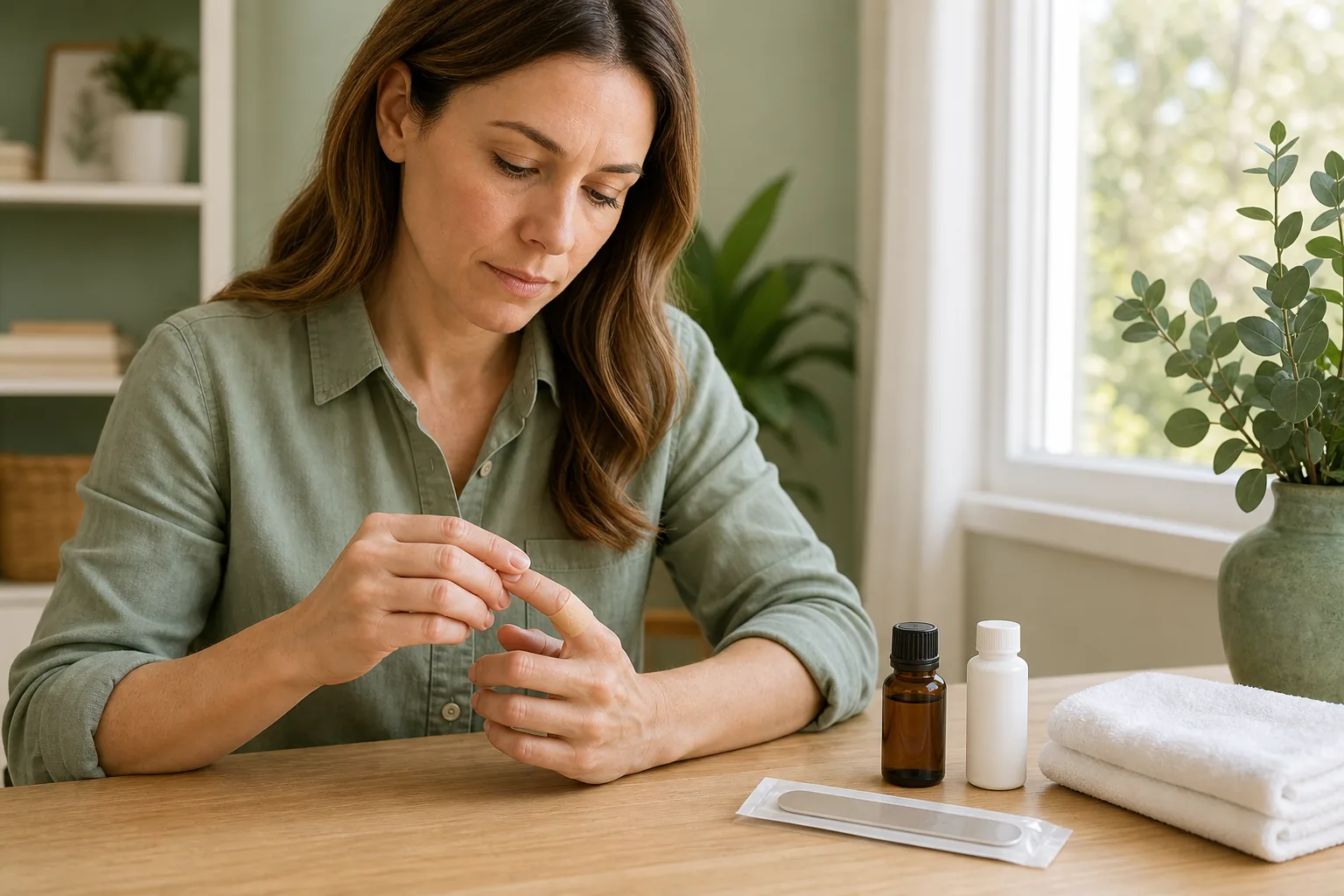
Follow the exact product label rather than a generic internet schedule. A typical routine may involve soaking the area briefly, gently removing only loose dead skin with a disposable tool used for that wart alone, protecting surrounding healthy skin, applying the medicine only to the wart, and covering it if directed. Stop if there is significant pain, bleeding, blistering, or spreading irritation.
The FDA’s over-the-counter wart-remover labeling says not to use these products on irritated, infected, or reddened skin; moles or birthmarks; growths with hair; genital or facial warts; or mucous membranes. It also warns against use by people with diabetes or poor circulation unless directed by a doctor.
Option 3: clinician treatment
A dermatologist may use liquid-nitrogen cryotherapy, cantharidin, curettage, electrosurgery, prescription medicines, immunotherapy, or laser treatment depending on the location, number, diagnosis, and previous response. Freezing can hurt and blister, and several visits may be needed. More aggressive is not automatically more effective, so the choice should reflect your priorities and risks.
Office treatment is especially useful for a painful plantar wart, a wart disrupting a nail, numerous or rapidly spreading warts, treatment failure, or diagnostic uncertainty.
Plantar warts need extra care
A growth on the sole may be pushed inward under thick skin and become painful with weight-bearing. Cushioned shoes or a donut-shaped pad can reduce pressure without treating the virus.
Do not cut or dig into the sole, and do not try to “remove the root.” Warts do not have roots; the dark points are small clotted vessels. Cutting can cause bleeding, infection, and further spread.
Anyone with diabetes, poor circulation, neuropathy, or reduced sensation should have a foot growth assessed before using an acid, freezing kit, sharp tool, or essential oil. A person who cannot feel early tissue injury may develop a serious wound.
Genital, facial, and oral warts are not DIY projects
Never use essential oils or an over-the-counter hand-and-foot wart remover on the genitals, anus, face, eyelids, lips, or inside the mouth or nose. These tissues are more vulnerable, and the diagnosis may be different from what it appears to be.
Genital warts are sexually transmitted and need clinician-directed diagnosis and treatment. The CDC’s anogenital-wart guidance lists patient-applied prescription medicines and provider-administered options selected according to location, size, number, pregnancy status, and preference. Removing visible warts does not necessarily eliminate HPV transmission.
HPV vaccination prevents infection from the HPV types targeted by the vaccine and can prevent most genital warts when given before exposure. It does not remove an existing common or genital wart. Ask a clinician about vaccination and appropriate sexual-health screening rather than treating genital bumps with oil.
Children, pregnancy, and immune suppression
Warts in children often clear naturally, so treatment discomfort should be weighed against the wart’s location and impact. Do not use a testimonial involving one child as proof that tea tree, oregano, frankincense, or another essential oil is safe for every child. Ask a pediatrician or dermatologist before treating a young child’s growth, especially on the face, around nails, or over a large area.
During pregnancy or breastfeeding, confirm the diagnosis and ask a clinician or pharmacist before using a medicated wart product. Some prescription wart medicines are not suitable during pregnancy, and a generic “natural” label does not establish safety.
People with HIV, cancer treatment, an organ transplant, immune-suppressing medicine, or another cause of reduced immunity may develop numerous or stubborn warts. They also have a greater reason to confirm the diagnosis and coordinate treatment with a clinician.
If an oil has irritated your skin
Stop using the product. Remove contaminated clothing or bandages and gently wash the area with mild soap and lukewarm water. Do not add another essential oil, acid, alcohol, peroxide, or “neutralizing” remedy.
Seek prompt medical advice for severe pain, blistering, extensive redness, facial or genital exposure, eye exposure, spreading swelling, pus, fever, or signs of an allergic reaction. Call emergency services for trouble breathing, throat swelling, faintness, or a rapidly developing widespread reaction.
If someone swallows an essential oil, do not induce vomiting. In the United States, contact Poison Control online or at 1-800-222-1222. Call emergency services for collapse, seizure, severe breathing trouble, or inability to wake.
Read the site’s broader essential-oil safety guide before using any concentrated aromatic product on skin.
Frequently asked questions
Can tea tree oil get rid of a wart?
There is one published case report, but that cannot establish effectiveness. Warts can disappear on their own, and tea tree oil can cause irritation or allergy. It is not as well supported as labeled salicylic acid for an ordinary hand or foot wart.
Does oregano oil kill the HPV in a wart?
There is no good clinical evidence that applying oregano essential oil clears HPV warts. Oregano can cause irritant dermatitis. Burning, peeling, or darkening of skin is not proof that the virus is gone.
Is frankincense proven for warts?
No. Frankincense is frequently mentioned in testimonials, but controlled human trials showing that ordinary frankincense essential oil removes warts are lacking.
Can I use duct tape?
Studies of duct-tape occlusion have produced mixed results, and adhesive can irritate skin. It should not be combined with a caustic essential-oil mixture. If you want to try an occlusion method, ask a pharmacist or clinician how it fits with a labeled wart treatment.
How long should a wart take to disappear?
Untreated warts may last months or years. Salicylic-acid products often require consistent use for weeks, within the maximum duration on the label. Arrange an examination if the growth persists despite correct treatment, spreads, returns repeatedly, or changes.
Are warts contagious?
Yes, but susceptibility varies. HPV can spread through direct contact, shared personal items, and small breaks in the skin. Avoid picking or shaving over a wart, keep personal tools separate, cover the area when practical, and wash your hands after treatment.
Bottom line
Tea tree and East Indian sandalwood oils have preliminary wart research, but neither supports a dependable DIY essential-oil treatment. Oregano, frankincense, and lemon claims are weaker, while direct or occluded application can injure skin.
First confirm that the growth is an ordinary wart. Waiting is often reasonable; a labeled salicylic-acid product is the better-supported home treatment for eligible hand and foot warts. Choose professional care for facial or genital growths, diabetes or circulation problems, immune suppression, pain, bleeding, change, treatment failure, or any uncertainty about the diagnosis.
Sources and further reading
- American Academy of Dermatology. Warts: Diagnosis and Treatment, Signs and Symptoms, and At-Home Treatment. Updated 2025.
- Kwok CS, et al. Topical Treatments for Cutaneous Warts. Cochrane Database of Systematic Reviews. 2012.
- U.S. Food and Drug Administration. OTC Monograph M028: Wart Remover Drug Products.
- Centers for Disease Control and Prevention. Human Papillomavirus Infection: Anogenital Warts.
- National Center for Complementary and Integrative Health. Tea Tree Oil: Usefulness and Safety.
- Millar BC, Moore JE. Successful topical treatment of hand warts in a paediatric patient with tea tree oil. Complementary Therapies in Clinical Practice. 2008. Case report.
- Mohankumar A, et al. Topical Sandalwood Oil for Common Warts. Clinical Pediatrics. 2017. Uncontrolled pilot study.
- ClinicalTrials.gov. A Trial of a Botanical Drug Containing East Indian Sandalwood Oil for Common Warts. Study record NCT01286441.
- de Groot AC, Schmidt E. Tea tree oil: contact allergy and chemical composition. Contact Dermatitis. 2016.
- Pansare M, et al. Spreading allergic contact dermatitis from a tea-tree-oil product applied to a wart. Case Reports in Pediatrics. 2022.
- Mayo Clinic. Plantar Warts: Symptoms and Causes.
Last reviewed: August 3, 2026
Medical disclaimer: This article is for education and general wellness information. It cannot diagnose a skin growth or replace care from a physician, dermatologist, podiatrist, pharmacist, pediatrician, or sexual-health clinician. Essential oils and wart removers can injure skin when misused. Seek professional evaluation for an uncertain, changing, painful, bleeding, facial, genital, or persistent growth, or before self-treatment if you have diabetes, poor circulation, reduced sensation, or a weakened immune system.
<!– ARTICLE END –>